
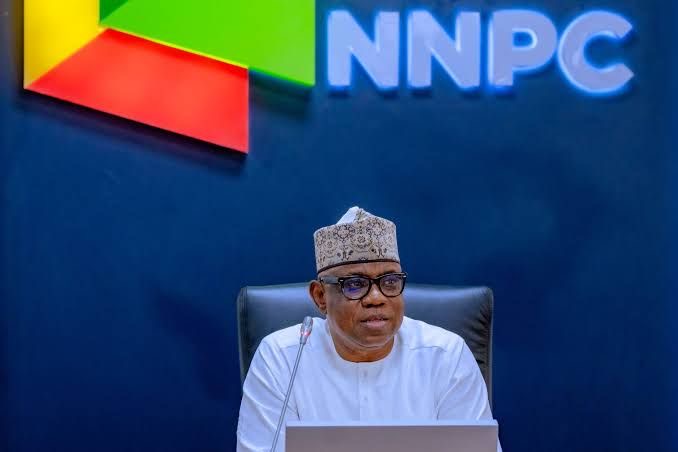

Ojulari disclosed this during a meeting with the leadership of the Petroleum and Natural Gas Senior Staff Association of Nigeria (PENGASSAN) at his Abuja office yesterday.
“When I resumed, one of the first priorities I focused on was the refinery. I did a quick review to see if we could fix it quickly. What I found was that we were losing between $300 million and $500 million monthly. We were pumping about 50,000 barrels of crude into the refinery, but less than 40 percent of that was coming out in refined products,” Ojulari explained.
The Port Harcourt Refinery, which had been moribund for years, was reopened in November 2024 under former NNPCL boss Mele Kyari, a move celebrated nationwide. However, operations were suspended in May 2025, barely a month after Ojulari assumed office on April 2, the same day Kyari was relieved of his duties.
Ojulari said he halted operations to stop further financial losses and to work towards a more sustainable model. “Rather than continue to lose money, we decided to pause operations and look for a way to make the refinery sustainably profitable,” he stated.
According to him, the NNPCL is considering adopting the Nigeria Liquefied Natural Gas (NLNG) model — a public-private partnership — to revive the country’s refineries. He confirmed that technical reviews had been completed for the three refineries, but stressed that the key challenge was not only technical but also commercial viability.
“It’s not enough to make the refinery technically sound; it must also make commercial sense. We’ve completed the commercial review of the Port Harcourt Refinery, and the conclusion is that the best way forward is to bring in professional refinery operators to partner with us,” Ojulari said.
He admitted that years of neglect had worsened the state of the refineries, likening their condition to “parking an old car without servicing.” He appealed to Nigerians, contractors, and workers to be patient, stressing that sustainable recovery was more important than quick fixes.
Ojulari also revealed that his reform efforts had attracted resistance and even threats to his life, but insisted he would not be deterred. “We are under attack, but we will not give in to short-term pressure. Change comes with a price, and Nigerians must be patient as we work towards lasting solutions,” he said, reaffirming his commitment to President Bola Tinubu’s directive on refinery rehabilitation.
On his part, PENGASSAN President Festus Osifo, who also doubles as President of the Trade Union Congress (TUC), pledged the union’s support for Ojulari and his team. He commended NNPCL’s efforts in stabilizing crude oil production — now at about 1.8 million barrels per day — and expressed optimism that with proper reforms, production could reach 2.6 million barrels daily by next year.
Ojulari’s revelations stand in stark contrast to the earlier position of his predecessor, Kyari, who had hailed the Port Harcourt Refinery’s reopening as “a new era of energy independence and economic growth.”
For now, the fate of Nigeria’s refineries remains uncertain, with Ojulari promising that operations will only resume when profitability and sustainability can be assured.