
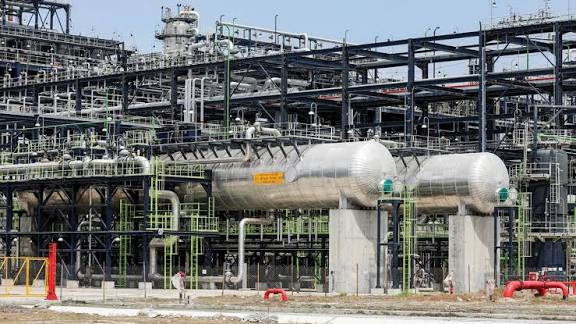


Lagos — Chief Executive Officer of Dangote Petroleum Refinery, Mr David Bird, don confirm say President Bola Ahmed Tinubu Naira-for-Crude arrangement with di refinery dey work well, but di plant still dey import about 65 percent of di crude oil wey e dey use.
Bird talk dis one on Wednesday during one press briefing, explain say di Nigerian National Petroleum Company Limited (NNPC Ltd) dey supply only 35 to 40 percent of crude oil to di 650,000 barrels-per-day refinery.
According to am, di refinery dey push for higher crude allocation under di Naira-for-Crude deal.
“Right now, di crude-for-naira arrangement dey give us about 30 to 35 percent of our crude supply. We hope say we fit increase am,” Bird talk.
He add say Aliko Dangote, di President of Dangote Group, dey hold ongoing talks with NNPC to increase di level of crude supply to di refinery.
“The president dey discuss with NNPC to raise di allocation. We think say di arrangement dey incredibly successful and we really appreciate di support from government,” Bird say.
Bird also clear di air on rumours say Dangote Refinery dey import petrol or finished fuel products. He insist say di refinery no dey import finished products at all.
“I fit guarantee una say we no dey import finished products. I be refinery, and I no get interest for importing finished products. Wetin we dey import na intermediate feedstocks and components to help boost our production capacity,” he explain.
Recall say di Federal Government start di Naira-for-Crude deal with Dangote Refinery for October 2024 to help reduce production cost and stabilise fuel prices.
Though di arrangement face some challenges for 2025, di government announce for April say di deal go continue indefinitely.
Meanwhile, Bird note say despite di Naira-for-Crude deal, global crude oil prices still dey affect local petrol prices. He point to recent increase in Dangote Refinery gantry prices, wey cause pump prices across Nigeria rise to between ₦839 and ₦905 per litre.
According to am, di development show say Nigeria fuel pricing still dey tied to international oil market conditions.