
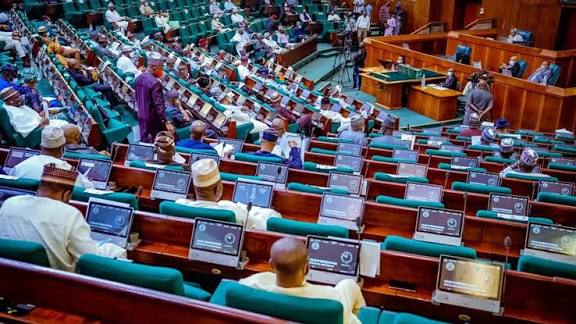

The House of Representatives don begin investigation into alleged non-release of ₦174.26 billion wey government earmark for agricultural intervention projects across the country.
Chairman of the House Committee on Agricultural Production and Services, Bello Ka’oje, talk say the committee don invite relevant Ministries, Departments and Agencies (MDAs), plus development partners, make dem fully cooperate and submit all documents needed for clear and transparent probe.
According to Ka’oje, the investigation follow motion wey him sponsor for January, wey mandate the committee to review agric projects funded by development partners, especially African Development Bank and Japan International Cooperation Agency, to be sure say money dey properly used.
The committee wan find out why the ₦174.26bn intervention funds never release, and also why fertiliser cost still dey high, matter wey don affect farmers and food production for Nigeria.
Ka’oje express worry say delay in releasing funds don worsen food insecurity, even after Bola Ahmed Tinubu declare state of emergency on food security for July 2023, action wey open door for donor-backed agric programmes.
He explain say Nigeria secure $134 million from AfDB for February 2023, and $99.67 million don already enter Consolidated Revenue Fund. But about ₦55.3 billion still never release to agro-dealers wey suppose support 280,000 wheat farmers and 150,000 rice farmers for 2024/2025 dry season.
Also, Ka’oje reveal say Nigeria get 15 billion Japanese Yen from JICA for April 2024. Though first tranche of 12 billion Yen (₦118.96 billion) drop for March 2025, the money never reach implementing agencies to support about 550,000 smallholder farmers.
He warn say the delay don cause farmers miss planting window, reduce expected harvest for 2025, and fit even affect chance of Nigeria getting additional AfDB funding under Result-Based Financing arrangement.
Ka’oje urge all MDAs and stakeholders make dem work with the National Assembly to remove all bottlenecks and fast-track the release of the funds, so Nigeria agriculture sector and food security no go suffer more.