
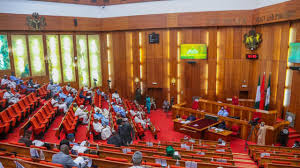

The National Assembly don warn Federal Government say the envelope budgeting system no dey enough to tackle Nigeria growing security challenges.
Senate raise the alarm on Wednesday during 2026 budget defence session of the Office of the National Security Adviser (ONSA) for Abuja, where lawmakers question officials over funding gaps, delay in cash releases and abandoned capital projects.
At the same time, House of Representatives Committee on National Security and Intelligence also describe the envelope budgeting model as serious obstacle to proper implementation of the 2025 budget.
“System No Match Security Reality” — Senate
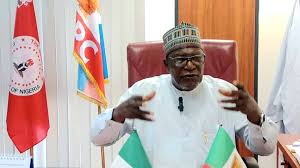
Chairman of Senate Committee on National Security and Intelligence, Yahaya Abdullahi, talk say the envelope budgeting framework don repeatedly fail to meet operational needs of Nigeria security and intelligence agencies.
According to am, the country still dey battle insurgency for North-East, banditry and kidnapping for North-West and North-Central, separatist tension for South-East and oil theft plus piracy for Niger Delta.
“The envelope budgeting system no sufficient to address the magnitude of security threats wey face this nation,” Abdullahi talk.
“If we serious about ending insecurity, then our funding structure must show am. Security agencies no fit operate well under financial constraint and delayed releases.”
He explain say the system wey fix expenditure ceiling for ministries and agencies too rigid for security sector wey require quick and flexible response.
ONSA Confirm Funding Wahala
Permanent Secretary, Special Services, Mohammed Sanusi, wey represent National Security Adviser Nuhu Ribadu, agree with lawmakers.
Sanusi say envelope budgeting, irregular overhead releases and failure to implement capital appropriations dey seriously affect operations.
“The envelope budgeting framework don pose serious challenges to our operations. Irregular releases and non-implementation of capital funds don limit our ability to coordinate and support security agencies,” he explain.
The committee later enter closed-door meeting to review classified part of the budget proposal, as lawmakers hint say funding system fit change during 2026 appropriation process.
Reps Raise Same Alarm
For House of Representatives, Sanusi also tell lawmakers say envelope system na major reason why 2025 budget implementation face problem.
Lawmakers point to constitutional sections wey empower them to make laws for peace, order and good governance, stressing say oversight on security agencies must be effective.
Lawmaker Blast Security Allocation
One lawmaker from Borno State criticize the proposed 2026 allocation to security sector.
According to breakdown, defence and intelligence sector receive N5.41 trillion, while intelligence sub-sector — including ONSA, DSS, National Intelligence Agency, Presidential Air Fleet and National Institute for Security Studies — get N664.12 billion allocation.
Personnel cost for intelligence agencies stand at N245.94 billion, overhead cost at N131.27 billion, while capital expenditure proposal na N286.90 billion.
The lawmaker describe the figures as “very abysmal,” saying e no reflect the seriousness of President speech to joint session of the National Assembly in December 2025.
“There is nothing to show say Presidency truly prioritise security if we check 2025 budget releases. If welfare and security na primary purpose of governance, security sector releases no suppose dey treated lightly,” he add.
As insecurity continue to threaten different parts of the country, debate over how government fund security agencies don become major issue ahead of final passage of the 2026 budget.